Investment Decisions

Make the case for investment.

Transition and resilience plans depend on decisions about capital. But the financial case is not always clear.

eddyline brings risk analysis, investment appraisal, financial modelling and governance together to help companies evaluate their options, understand the consequences and make informed commitments.


Answer the questions behind every investment decision

Before capital is committed, management wants to understand:

RISKWhat happens if we do nothing?
The cost of inaction, including financial losses, operating consequences and risks to future performance.
RISKWhat options are available?
The measures that could be implemented, how they differ and what each would achieve.
CAPITALWhich investments create or protect the most value?
The costs, benefits, uncertainties and trade-offs across competing projects.
CAPITALHow will we pay for them?
The timing of expenditure, available funding, financing structures and implications for cash flow.
GOVERNANCEHow will these decisions affect the business?
The effects on financial performance, assets, liabilities, capital plans and future flexibility.
Investment Decisions

From investment case to investment plan.

Our Climate Capital Management System connects selected adaptation investments with funding sources, financing structures and stakeholder requirements.

It helps us test financial constraints and prepare a clear basis for financing decisions.

Discuss your investment plans
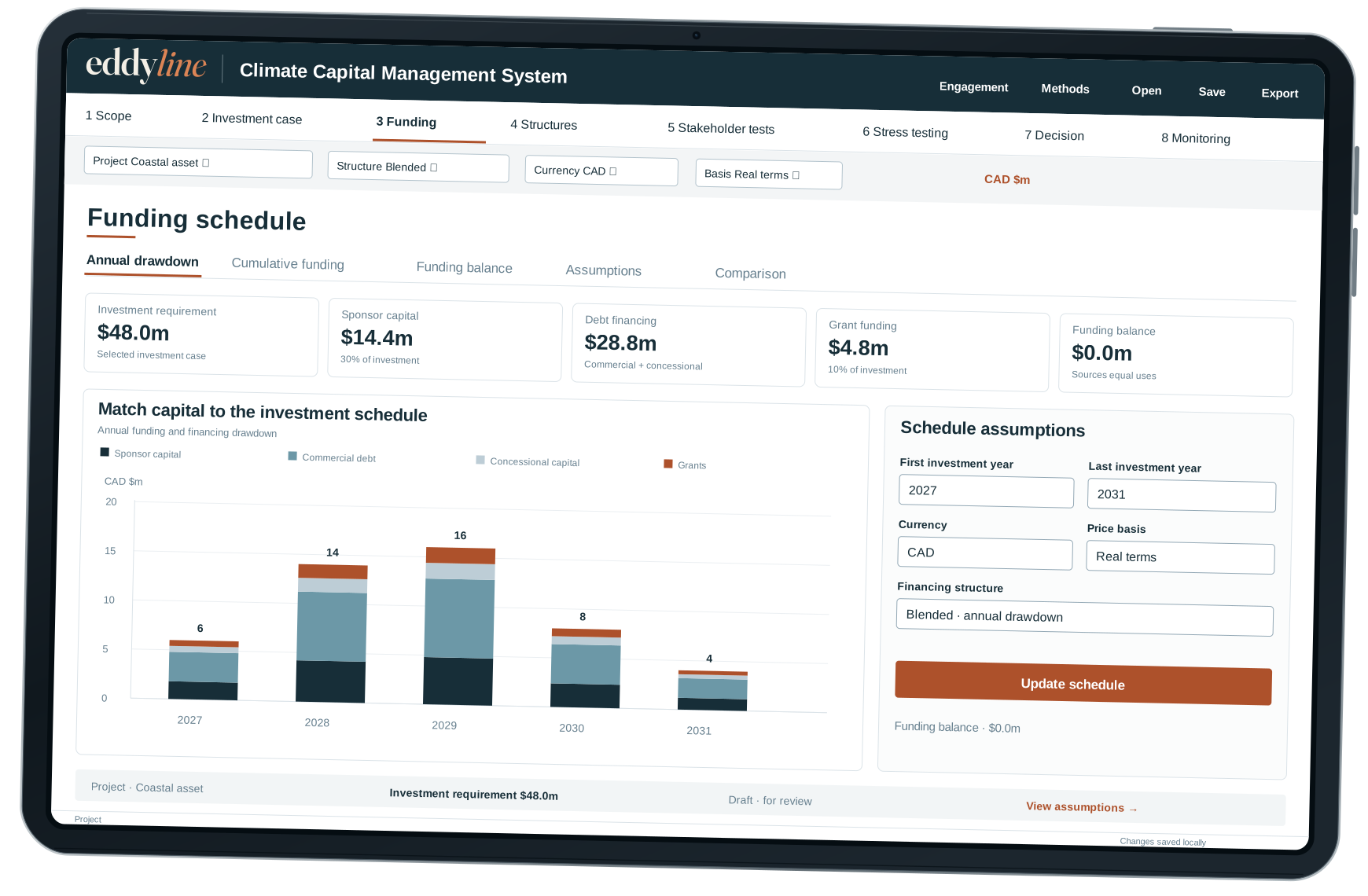
Climate Capital Management System interface preview showing a five-year funding schedule, capital mix and financing assumptions in a tablet.

Climate Capital Management System

Funding and financing analysis to support investment decisions.

  • Funding sources
  • Financing structures
  • Stakeholder requirements
  • Stress testing
Financial integration

Connect to the capital plan and financial accounts

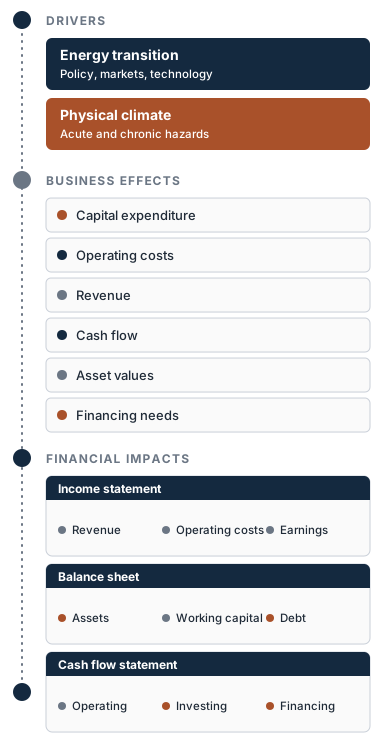
A project may change capital expenditure, operating costs, revenue, cash flow, asset values and financing needs.

We translate technical measures into financial forecasts, assess their implications for business performance and evaluate relevant accounting considerations under applicable reporting standards.

Even when an investment is justified, funding may remain a constraint. We examine affordability, investment sequencing, incentives and financing structures to make the capital plan feasible.

Energy and climate drivers connect to the financial accountsEnergy transition, including policy, markets and technology, and acute or chronic physical climate hazards can change capital expenditure, operating costs, revenue, cash flow, asset values and financing needs. Capital expenditure connects to assets and investing cash flows. Operating costs connect to the income statement and operating cash flows; revenue connects to the income statement. Cash flow connects to working capital and operating cash flows. Asset values connect to assets. Financing needs connect to debt and financing cash flows. These illustrate forecast connections; accounting recognition, measurement and disclosure require assessment under applicable standards.Energy transitionPolicy, markets, technologyPhysical climateAcute and chronic hazardsCapital expenditureOperating costsRevenueCash flowAsset valuesFinancing needsIncome statementRevenueOperating costsEarningsBalance sheetAssetsWorking capitalDebtCash flow statementOperatingInvestingFinancing
Energy transition and physical climate affect capital expenditure, operating costs, revenue, cash flow, asset values and financing needs, with financial impacts across the income statement, balance sheet and cash flow statement.

Keep your investment plan ready.

We take on the recurring work that keeps energy transition and climate resilience plans useful for investment and delivery decisions.

Continue from investment appraisal into ongoing plan updates, funding reviews and delivery tracking.

Explore climate investment support