Climate Resilience

From climate risk intelligence to resilience investment decisions.

Climate exposure becomes a business issue when it interrupts production, damages assets or changes the cost of operating.

We help companies choose adaptation measures, determine the capital and funding they require, and build delivery plans that stay useful as conditions change.

Compare the responses

Set the priorities. Weigh the responses.

There is more than one way to keep a business operating in a changing climate.

A flood barrier, a change to an asset, a new operating procedure or a different location can protect value in different ways. The right combination depends on critical services, dependencies and the consequences of failure.

We help companies define the protection they need, test responses across plausible conditions and identify where investment will make the greatest difference.

Illustrative asset value bridge: physical risks reduce baseline value from 100 to 69; resilience actions restore value to 88. Resilient Value is highlighted in burnt copper.
Cost and timing

Match the protection to its cost and timing.

An adaptation plan needs a financial case as well as a protection standard.

We estimate capital, operating costs and the losses each response could prevent. We then test the commitment against financial forecasts, available funding and the other investments the business needs to make.

Timing matters: an affordable response must be ready before it is needed. We make lead times, remaining exposure and the conditions for further investment explicit.

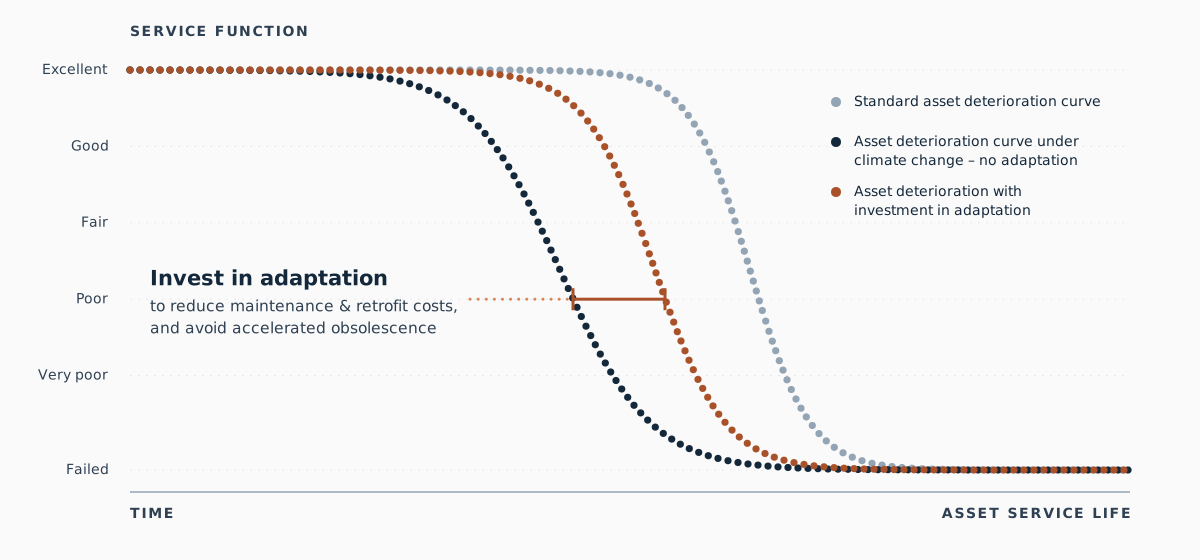
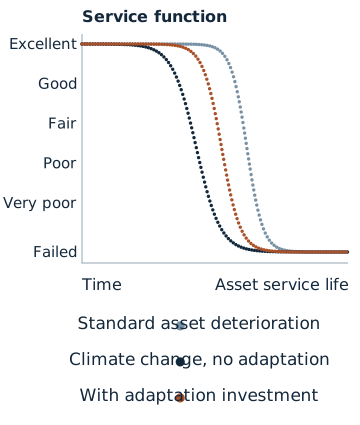
Three asset deterioration curves compare standard ageing, faster deterioration under climate change without adaptation, and an extended service life with adaptation investment. Moving markers trace the curves over time.
From decision to delivery

Make resilience a funded programme.

We help companies turn the preferred response into a funded programme with responsibilities, milestones and measures of protection and business performance.

The plan identifies what to implement now, what to prepare next and what evidence would change the decision. This connects adaptation with the capital plan and makes course correction a managed choice.

A financially viable adaptation strategy that is responsive to change
  1. 01

    Prioritise protection

    Set the service level and select measures for the assets that matter most.

  2. 02

    Secure capital

    Allocate the budget, confirm funding and specify the conditions for each commitment.

  3. 03

    Build and verify

    Give delivery owners milestones and tests for the promised level of protection.

  4. 04

    Track and respond

    Review performance and changing hazards; open the next investment decision when a signpost reaches its trigger.
Sequenced programme
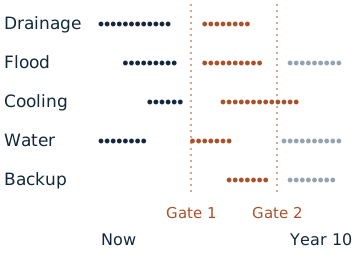
Sequenced programmeDrainage, flood protection, cooling, water resilience and backup systems progress through committed, planned and optional actions over ten years. Two decision gates allow later commitments to be reviewed. Dots illustrate sequencing, not quantities.DrainageFloodCoolingWaterBackupGate 1Gate 2NowYear 10
Sequenced programme: the same actions and relative quantities arranged for a small screen.
CommittedPlannedOptional
Capital by year
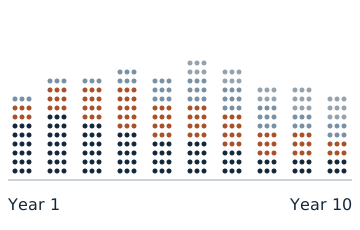
Capital by yearTen annual stacks combine protection, asset upgrades, water resilience and contingency. Initial measures are followed by staged investment and later provisions. Total relative capital rises and then tapers. Dots show relative scale, not currency.Year 1Year 10
Capital by year: the same actions and relative quantities arranged for a small screen.
ProtectionAsset upgradesWater resilienceContingency
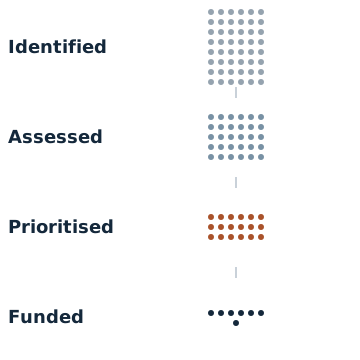
Pipeline to plan
Pipeline to planA broad set of identified actions is assessed, prioritised and narrowed to a funded programme. The shrinking dot groups illustrate selection rather than counts of projects.IdentifiedAssessedPrioritisedFunded
Pipeline to plan: the same actions and relative quantities arranged for a small screen.

Keep the resilience plan current.

Review adaptation priorities, funding needs and delivery progress as asset conditions and risk evidence change.

Explore climate investment support